

Last updated October 30, 2026
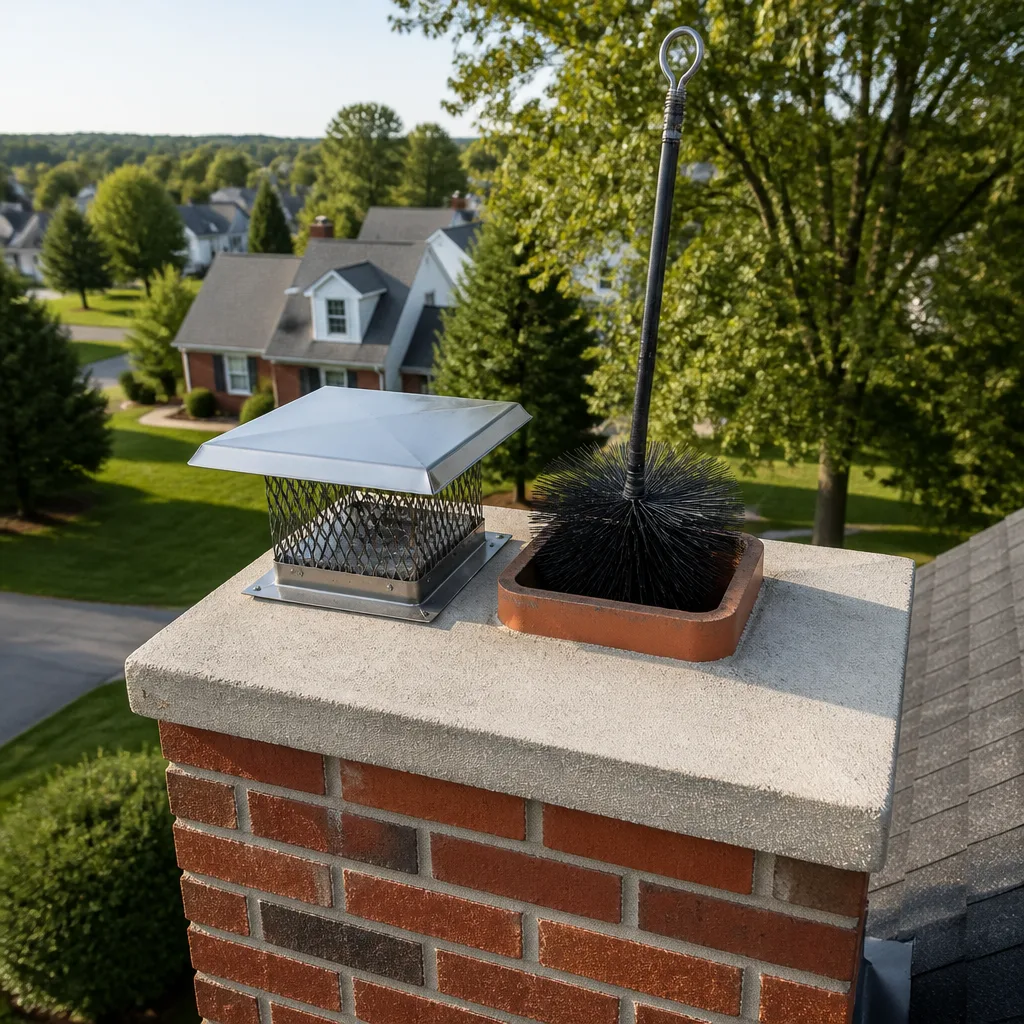 Sweep & inspection
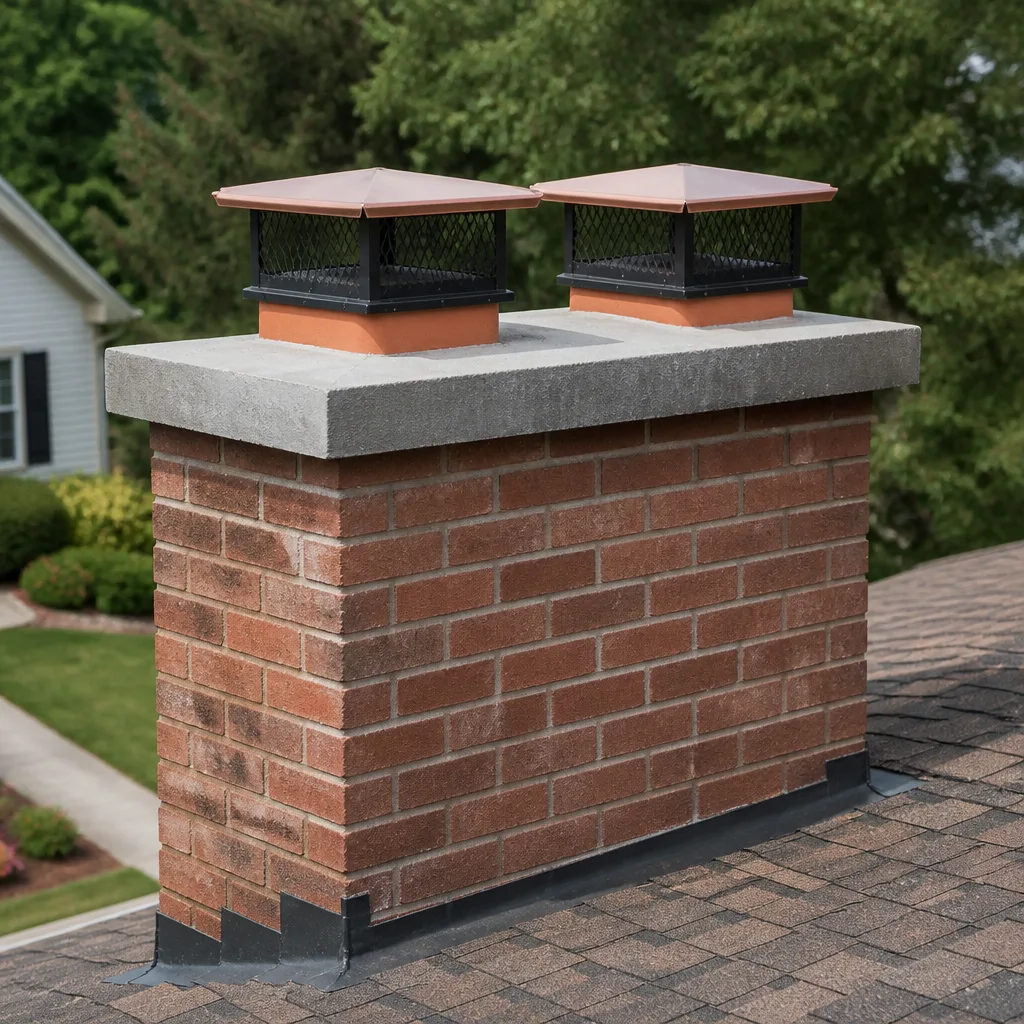 Caps & crowns
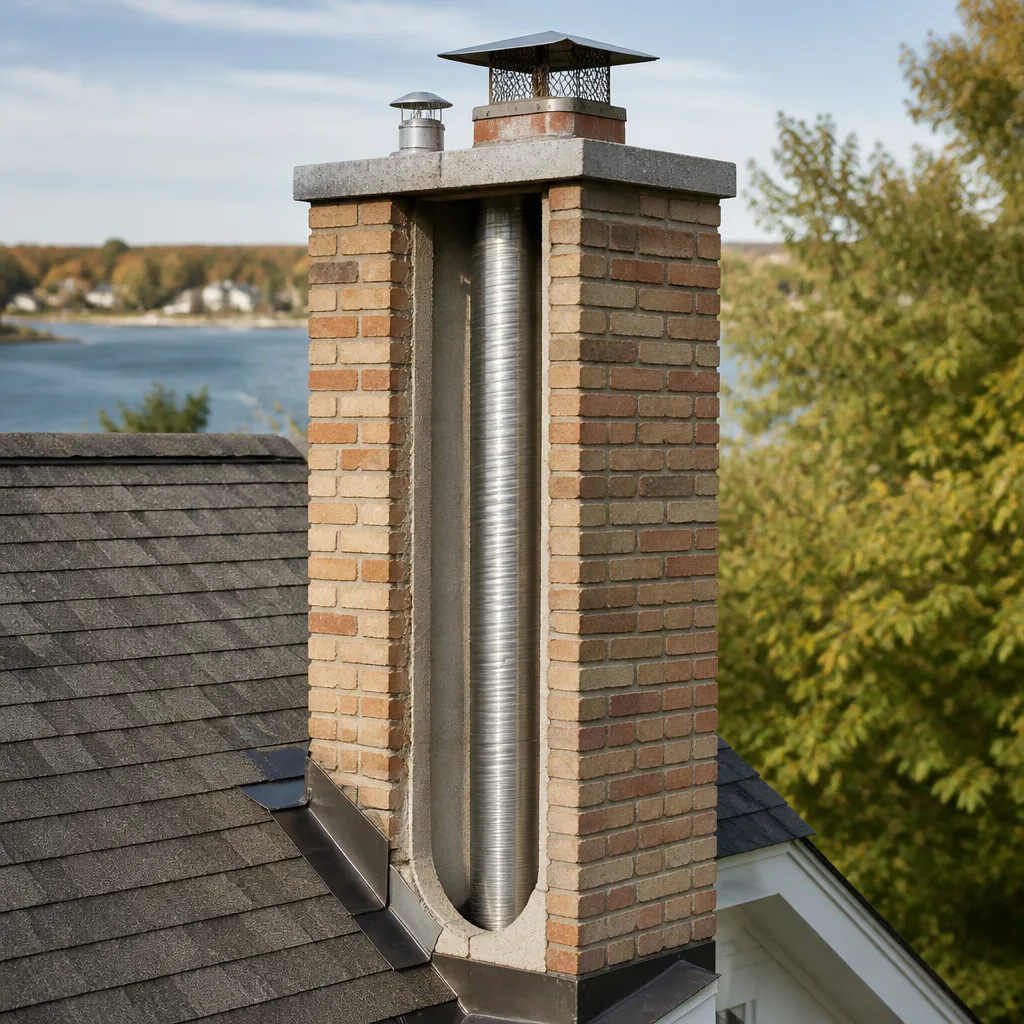 Flue relining
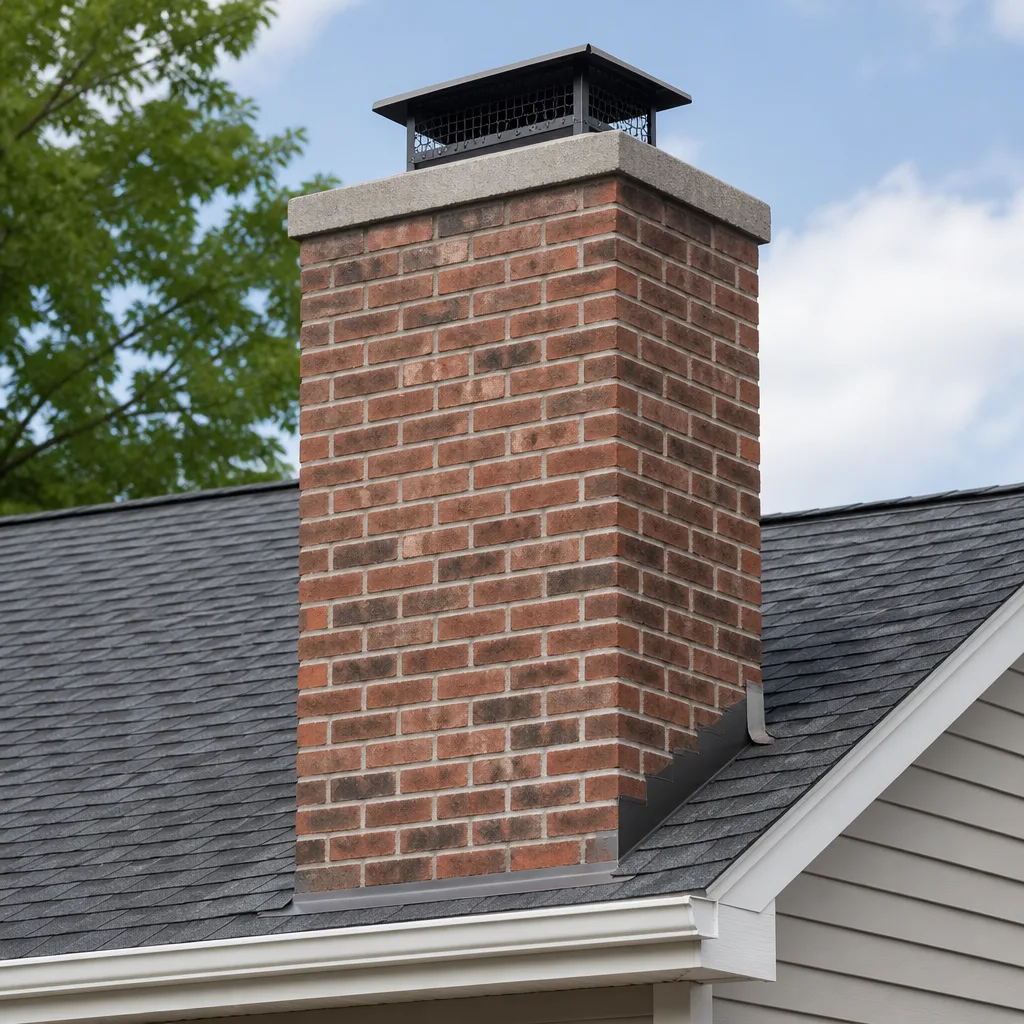 Masonry repair
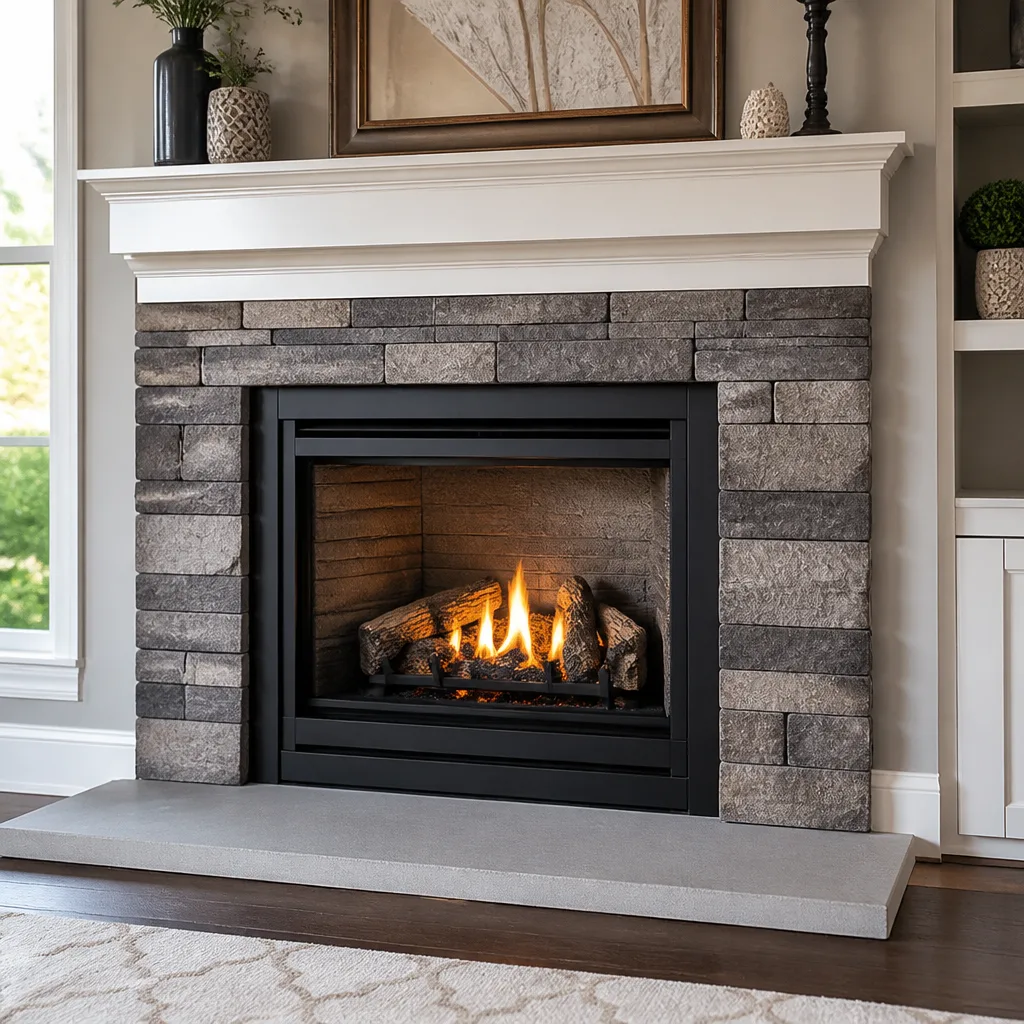 Gas fireplace service
Level 1 sweep and inspection to the NFPA 211 annual standard - flue, crown, cap, and flashing checked and photographed
Chimney sweep logs do not sweep chimneys. They loosen some creosote - which then falls where a brush and vacuum still have to collect it.
Chimney Cleaning Warning Signs: A Koreatown Homeowner’s Reference Guide
The most dangerous condition a wood-burning fireplace can develop, Stage 3 glazed creosote, produces almost no visible warning signs during normal use. It doesn’t smoke, it doesn’t smell strongly, and it doesn’t announce itself until the moment it ignites. By the time you notice something wrong, you’re often one fire away from a chimney fire that burns at nearly 2,000°F inside your flue. This guide is written for Koreatown homeowners who want to catch problems months earlier than the obvious symptoms allow. We’ll walk through the subtle signals: draft changes, masonry staining, sounds, damper behavior, and odors, each tied to how homes in this neighborhood are actually built and used.
Quick Answer
Chimney cleaning warning signs in Koreatown include a fireplace that’s harder to start than it used to be, a faint sour or smoky odor when the fireplace is cold, white mineral staining on exterior brick, and a damper that sticks or shows rust. Any one of these is worth a professional inspection. Together, they indicate creosote buildup, moisture intrusion, or both, and a chimney sweep should be scheduled before the next burn season. For a full breakdown of what to check, see our Chimney Sweep Maintenance Checklist for Koreatown Homeowners.
Styles & brands we work with
Table of Contents
- Draft Performance: What a Sluggish Fire Is Telling You
- Efflorescence: The White Stain That’s Not Cosmetic
- Sound Diagnostics: What Your Chimney Says When It Moves
- Your Damper Is the Canary: Reading Corrosion and Warping
- Odor Mapping: Three Distinct Smells, Three Different Problems
- Understanding Creosote: Why It Builds Differently in Koreatown
- Warning Signs for Gas Fireplaces and Inserts
- When Koreatown Homes Should Schedule a Sweep
Draft Performance: What a Sluggish Fire Is Telling You
A healthy chimney pulls. When you light a fire in a Koreatown home with a properly functioning flue, the smoke moves upward and out with a visible sense of purpose. The draft is not subtle. If you’ve noticed that your fireplace takes longer to get going, produces smoke that lingers near the opening before reluctantly rising, or occasionally puffs smoke back into the room when a gust of wind hits the roof, that’s a diagnostic signal, not an annoyance. A sluggish draft usually means one of three things: creosote has narrowed the flue passage, the chimney cap is partially blocked, or the flue is sized wrong for the fireplace after years of use have altered the burn dynamics. Our Chimney Sweep Troubleshooting: Common Problems and How to Fix Them covers each scenario in detail. In older Koreatown apartment buildings and single-family homes built between the 1920s and 1970s, we regularly see flues that were designed for wood loads and burn habits that no longer match how people use the fireplace today.
Cold backdraft is a related but distinct signal. This is when cold air sinks down the chimney and blows into the room even when no fire is burning. You’ll feel it as a chill near the fireplace on cold mornings, often accompanied by a faint smell of ash or old soot. Backdraft indicates that the chimney is not properly sealed at the top or that negative air pressure inside the home is winning the battle for air. Homes in Koreatown with older windows and doors, or with kitchen and bathroom exhaust fans that run frequently, are especially prone to negative pressure. What we’re looking for as professionals is whether the backdraft is caused by a mechanical issue in the home or by a chimney that’s lost its ability to isolate air. Sometimes the fix is a top-sealing damper or a properly sized cap. Sometimes it’s more involved. The point is that intermittent smoke puffs and cold drafts are not quirks to live with. They’re the earliest reliable warning that the system is out of balance.
If you’re in Koreatown and noticing any of these symptoms, a professional Chimney Sweep in Koreatown can assess whether the issue is creosote, a blockage, or a pressure problem in the home. For more significant structural concerns, our Chimney Repair in Koreatown service covers liner and masonry issues that affect draft.
Efflorescence: The White Stain That’s Not Cosmetic
Walk around the outside of your Koreatown home and look at the chimney. If you see white, chalky staining on the brick or mortar, that’s efflorescence. It’s not paint overspray, it’s not salt from the air, and it’s not a cosmetic issue you can ignore. Efflorescence is dissolved minerals being carried to the surface of the masonry by water moving through it. The stain is the visible end of a moisture cycle that is actively deteriorating your chimney from the inside. In Koreatown’s climate, with coastal humidity combined with occasional heavy rain and dramatic temperature swings, moisture intrusion is the leading cause of premature chimney failure. The white stain is your chimney telling you that water is getting in somewhere: through a cracked crown, damaged flashing, porous brick, or a failed mortar joint.
Here’s the specific sequence to look for. If the efflorescence appears on exterior masonry, it means water is moving outward through the brick from somewhere higher in the structure. If you see white staining on the firebox interior, around the damper, or on the floor near the hearth, that’s a red flag that water is entering the flue directly and washing soot and mineral deposits down into the living space. That interior efflorescence is often accompanied by a subtle musty or mineral smell, especially during humid weeks. The damage isn’t just aesthetic. Water that freezes inside brick and mortar expands and cracks it. Water that reaches the flue liner accelerates deterioration of clay tile liners and can damage stainless steel systems over time by promoting corrosion at joints. A chimney with active efflorescence is a chimney whose structural lifespan is shortening.
The fix is not to scrub the stain. The fix is to find and stop the water entry. That means inspecting the cap, the crown, the flashing, and the masonry condition itself. When we assess homes in Koreatown with efflorescence, we’re looking for the source, not just the symptom, because a repair that doesn’t stop the water is a repair that fails. The materials we use for structural repairs, including Gelco caps and professional flashing systems, are sourced from the same supply lines restoration contractors rely on. The product alone isn’t the point. But the fact that we use it signals this: we’re treating your chimney as a structure, not just a tube to be swept.
Sound Diagnostics: What Your Chimney Says When It Moves
Your chimney makes sounds, and most of them are normal. During a fire, you’ll hear the tick of metal expanding and the subtle crackle of brick warming. These are thermal expansion sounds and they resolve within minutes of the chimney reaching temperature. What you should not hear, and what should send you to the phone, are sharp cracking sounds that occur when the chimney is not in use, or settling sounds that happen abruptly during weather changes, or a low grinding sound when the wind blows. These indicate movement that goes beyond thermal cycling.
Here’s the difference as we hear it in the field. Thermal expansion is rhythmic, predictable, and fades. A sharp crack that happens once, with no fire burning, especially after a rain or during a cold snap, is often a masonry joint letting go or a piece of deteriorated mortar finally failing under stress. In Koreatown homes with unreinforced masonry chimneys, common in pre-1960 construction, the mortar was mixed with lime that has now degraded. Those chimneys flex more than they should in high wind. The grinding sound you might hear during a Santa Ana event is the masonry actually moving, and that’s not something to monitor. That’s something to address, because a chimney that moves is a chimney that can separate, and a separated chimney is a serious safety hazard. Liner movement has its own sound profile. A stainless steel liner that has come loose from its insulation or shifted in the flue makes a dull thud or rattle when air pressure changes or when a door slams nearby. We’ve diagnosed liner issues from that sound alone, and the subsequent camera inspection confirmed it.
The reason we tell Koreatown homeowners to listen is simple: sound is often the earliest warning. Visual inspection fails with chimneys because the majority of surfaces are not visible. Sound travels through the structure and carries information about what’s happening inside the walls and inside the flue. If you’re hearing sounds that don’t match the rhythm of normal heating and cooling, get it checked. The most frustrating situations are the ones where a homeowner waited until a loose liner turned into a fire hazard or a shifted flue caused carbon monoxide spillage into the home. When we inspect a chimney, we document what we find with camera footage and show it to you. No vague warnings. You see the liner, the joints, the cap, the crown. What we say is backed by what you can see for yourself.
Your Damper Is the Canary: Reading Corrosion and Warping
The damper sits in the most chemically active zone of your chimney. It’s directly above the fire, but below the flue, so it’s exposed to high heat, condensation, creosote residue, and any water that gets past the cap. That exposure makes the damper an excellent diagnostic tool if you know what to look for. In Koreatown homes, the most common damper issues we see fall into three categories: stiffness, corrosion patterns, and warping, and each one points to a different underlying condition.
A damper that has become stiff or difficult to operate is usually telling you about moisture. When water enters the flue and sits on the damper mechanism, it promotes rust at the pivot points and on the lever arm. In the early stages, the damper gets stiff but still works. Later, it seizes entirely, often in a partially open position that kills your draft. This is common in Los Angeles because the wet season is short and intense, so small amounts of water enter, sit, and rust over months of dry weather, repeating the cycle year after year. Corrosion patterns tell you where the water is coming from. Rust concentrated on the top surface of the damper plate points to water entering from above, through a failed cap or cracked crown. Rust concentrated on the bottom surface, facing the fire, points to condensation forming during fires and not drying properly, which suggests a draft or insulation problem. Warping is a heat signal. If the damper plate has cupped or bowed, it means the damper was exposed to temperatures it wasn’t designed to sustain, usually during a chimney fire the homeowner didn’t notice. Yes, chimney fires can happen and extinguish themselves without the homeowner ever knowing. The warped damper is the evidence.
Checking your damper once a year, before the fall burn season, is a simple habit that costs nothing. But don’t try to repair a seized or rusted damper yourself. The mechanisms are under spring tension, and the area around the damper often contains creosote dust that you don’t want to disturb without proper protection. This is a job for a professional who can also assess why the damper failed. If the answer is just a worn mechanical part, the repair is usually straightforward. If the answer is water intrusion, the damper was trying to tell you something bigger.
Odor Mapping: Three Distinct Smells, Three Different Problems
Odor is the sense most homeowners trust least, because it’s subjective and intermittent. But with chimneys, smell is one of the most reliable diagnostic tools available, if you know how to map it. The key is identifying the quality of the odor and the conditions under which it appears. In our work across Koreatown, we categorize chimney odors into three types: creosote odor, animal intrusion odor, and masonry moisture odor. Each one requires a different response, and confusing them leads to wasted time and money.
Creosote odor is the smell of an old campfire that someone left wet. It’s smoky, but with a sharp, almost chemical edge. It’s most noticeable on humid days or when the house is closed up and the air pressure changes. You’ll often smell it more when the AC or a bathroom fan is running, because negative pressure pulls air down the chimney and into the living space. A creosote smell in cold conditions means the flue has a buildup that’s off-gassing. That buildup is fuel. It should be removed before it ignites. Animal intrusion odor is different. It’s acrid, slightly sweet if decomposition is involved, and often localized near the fireplace opening. It means a bird, squirrel, or raccoon has nested in the flue or the smoke chamber. In Koreatown, with mature trees close to rooflines and older homes with uncapped or poorly capped chimneys, animal intrusion is common. The fix is not to light a fire and smoke them out. That’s a fire hazard and it’s inhumane. The fix is professional removal of the nest and animal, followed by installation of a properly fitted cap. We use Gelco caps for this reason; they’re engineered to keep animals out while maintaining full draft, and they’re the same caps used by restoration and fire-safety professionals.
Masonry moisture odor is the third category, and it’s the one homeowners most often mistake for a simple “old house smell.” It’s musty, mineral, sometimes slightly sour. It happens when water has saturated brick or mortar and is slowly evaporating back out. In Koreatown’s rainy season, this odor is strongest in the first weeks after heavy rain. If you smell it near the fireplace but haven’t had a fire in the chimney for months, and the flue is clean, the problem is water in the masonry. That means efflorescence is likely not far behind, if it hasn’t appeared already. Moisture odor is a structural warning, not a cleaning issue. A sweep won’t fix it. You need a chimney repair specialist who can find the water entry point, stop it, and assess the extent of the masonry damage. All three odors are warnings. The first two say clean me now. The third says the problem is already past cleaning.
Understanding Creosote: Why It Builds Differently in Koreatown
Creosote is the tar-like byproduct of burning wood, and it builds up in every wood-burning chimney on Earth. But it doesn’t build up the same way everywhere. The amount and type of creosote in your Koreatown chimney depends on three factors: what you burn, how hot the fire burns, and how well the flue stays warm from top to bottom. In Los Angeles, where winters are mild and fires are often smaller and shorter than in colder climates, creosote tends to build differently than in homes where the fireplace runs hot and long every night. Understanding the stages helps you understand why some warning signs are invisible.
Stage 1 creosote is a fine, flaky soot. It’s easy to remove with a standard sweep. Stage 2 is a thicker, tar-like coating that requires more aggressive mechanical removal. Stage 3 is glazed creosote, a dense, shiny, hardened layer that looks like black glass coating the inside of the flue. Stage 3 is the dangerous one. It burns hot, it’s hard to remove, and it produces almost no detectable odor or draft symptoms during normal use because it forms in a smooth, even layer that doesn’t restrict airflow the way a lumpy Stage 2 buildup does. A Stage 3 glazed flue can look almost clean from the bottom on a casual visual check. This is why a professional inspection with a camera is the only way to know for sure what’s inside your chimney. In Koreatown, the pattern we see is this: homeowners who burn occasional fires with well-seasoned hardwood may go years with only Stage 1 buildup and a simple sweep is all they need. Homeowners who burn softer woods, use the fireplace infrequently, or burn with the damper mostly closed to extend burn time create the conditions for Stage 2 and Stage 3. Incomplete combustion, low flue temperatures, and extended smoldering are all creosote accelerators. The flue never gets hot enough to burn off the early deposits, so they accumulate and harden over repeated cycles.
The takeaway is not that you should burn hotter fires. The takeaway is that the only way to know your creosote stage is a professional assessment. We inspect every flue with a camera before and after cleaning, and we show homeowners the footage. That’s not a sales tactic. It’s how we know what needs cleaning, what can wait, and what needs repair, and it’s how you know you’re not being told you need a liner replacement when the real issue is a routine sweep. In Koreatown, we serve a clientele that expects to see the evidence, and we’d rather show you than tell you.
Warning Signs for Gas Fireplaces and Inserts
Gas fireplaces and inserts do not produce creosote, and they don’t require sweeping in the traditional sense. But they are not maintenance-free, and Koreatown has a significant number of homes with gas fireplaces, either original to the building or added during remodels. The warning signs for gas systems are different from wood systems, and knowing them prevents both fire hazards and carbon monoxide risk. This is the part of the chimney world where the word “cleaning” is misleading, because what gas systems need is inspection, not sweeping.
- Flame color change: A healthy gas flame is blue at the base with some yellow at the tips. If the flame shifts to mostly yellow or orange, or if it flickers unevenly when the glass is closed, that indicates incomplete combustion. Incomplete combustion produces carbon monoxide. The cause is often a clogged burner, dirty ports, or improper air-to-gas mix. This is a repair issue, not a cosmetic one.
- Soot on the glass or logs: Gas systems should not produce soot. If you see black staining on the inside of the glass or on the ceramic logs, the unit is not burning correctly. The fix requires cleaning the burner, checking gas pressure, and inspecting the venting. Ignoring soot on a gas fireplace is how homes develop carbon monoxide problems slowly, without any odor to warn them.
- Odor from the gas fireplace when off: A gas smell when the fireplace is running is an immediate emergency. A slight musty or dusty odor when the fireplace is off, especially during humid weather, is usually moisture in the venting or dust on the burner. Both should be checked, but only the gas smell demands shut-off and professional attention immediately.
- Flame lifting or ghosting: If the flame seems to float above the burner or wanders unpredictably, the venting may be blocked or the gas pressure is off. This often means birds or debris have entered the vent termination. A visual check of the exterior vent cap is worth doing monthly during use seasons.
Gas fireplaces have one advantage over wood systems: they don’t hide creosote. But they have their own failure mode, which is carbon monoxide, and carbon monoxide doesn’t announce itself. If you have a gas fireplace in Koreatown and you’ve never had the venting inspected, or you use it regularly in winter and have noticed any of these signs, get it checked. The same principles apply as with wood systems. We inspect, we document, we show you what we found, and we explain what actually needs work versus what can be left alone.
When Koreatown Homes Should Schedule a Sweep
The conventional advice is to sweep your chimney once a year, and that’s a fine baseline. But the real answer for Koreatown homes is more specific. The timing of your sweep should follow the rhythm of your fireplace use, not the calendar. Most Koreatown homeowners burn fires from late November through early March, with the heaviest use in December and January. The ideal time to sweep is at the end of the burn season, in March or April, when the creosote from winter fires is fresh and before the long dry season gives it months to harden and glaze. Fresh creosote is easier to remove than aged creosote. A sweep in March takes less time and costs less than waiting until October, when the same buildup has cured for six months in dry Los Angeles air.
But there’s a second window that matters, and it’s the pre-season inspection. Even if you swept in March, your chimney has been sitting unused through the summer. Birds have had months to nest. Rain has had a season to find any new entry points. The October inspection is about making sure the chimney you’ll use in November is still in the condition you left it in March. The two-visit rhythm, post-season sweep plus pre-season check, is what we recommend to Koreatown homeowners who use their fireplaces regularly. For homeowners who burn only a few fires per year, an annual visit that combines inspection with cleaning as needed is sufficient. The principle is this: the sweep should be scheduled based on when you burn, not on some arbitrary date. If you burn year-round, you need more than one sweep. If you burn only on holidays, once a year is fine. What you should never do is let years pass because the fireplace “seems fine.” The whole point of this guide is that the early warning signs are subtle. The fireplace that “seems fine” is often the one with Stage 3 creosote, because Stage 3 is quiet.
For Koreatown homeowners who also have dryer vents, the scheduling logic is similar. Lint builds up with each load of laundry, and the buildup rate depends on how often the dryer runs. A household doing five or more loads a week should have the dryer vent cleaned annually. A household doing one or two loads a week can safely go two years. You can read more about that service on our Dryer Vent Cleaning in Koreatown page. Dryer vents are the quiet hazard most homes ignore, and we include them in the same conversation as chimney safety because the principle is identical: you can’t see the problem, so you schedule prevention based on use patterns, not symptoms.
Common Mistakes to Avoid
- Ignoring a slow draft and compensating with open windows. If you’re cracking a window to keep smoke from backdrafting into the room, you’re masking a pressure or flue problem. That fix costs more later.
- Scrubbing efflorescence off the brick. Removing the stain doesn’t stop the water. The minerals will return in months, and the masonry continues deteriorating underneath.
- Lighting a fire to “burn out” an animal nest. Nests are flammable and often contain dried plant material. Igniting one inside a chimney can start a fire that spreads to the roof structure.
- Assuming a gas fireplace needs no maintenance. Gas systems don’t make creosote, but they do wear out, clog, and develop venting problems. Carbon monoxide doesn’t smell.
- Waiting for a smell to schedule a sweep. By the time you notice a creosote odor, the buildup is substantial. The most dangerous stage of creosote often produces no odor at all.
- Hiring a generalist handyman for chimney work. Chimneys are structural systems with fire safety implications. A handyman can’t run a camera inspection, can’t assess liner integrity, and won’t carry the professional-grade materials a dedicated chimney company does.
- Trusting a visual check from the bottom of the firebox. You cannot see the flue liner from the bottom, and you cannot see the upper third of the chimney from the ground. A proper inspection requires a camera.
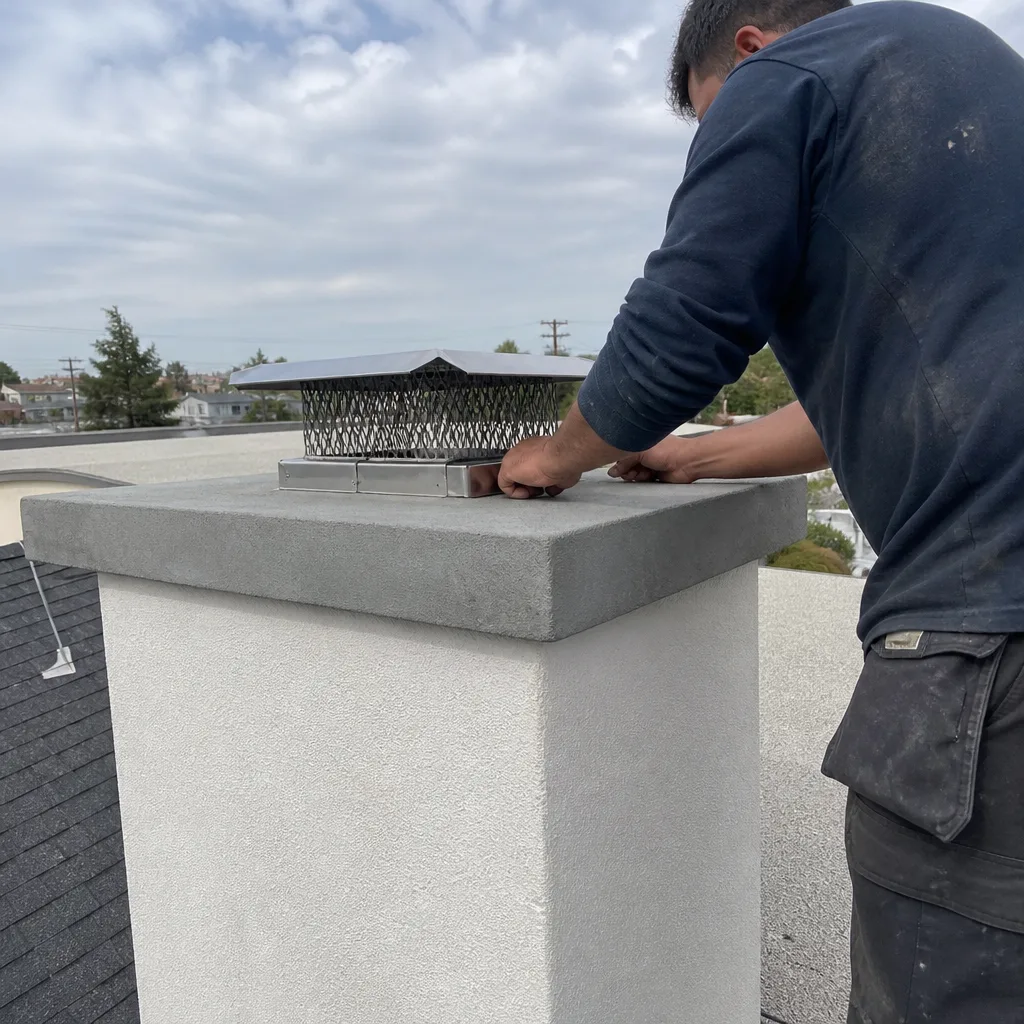
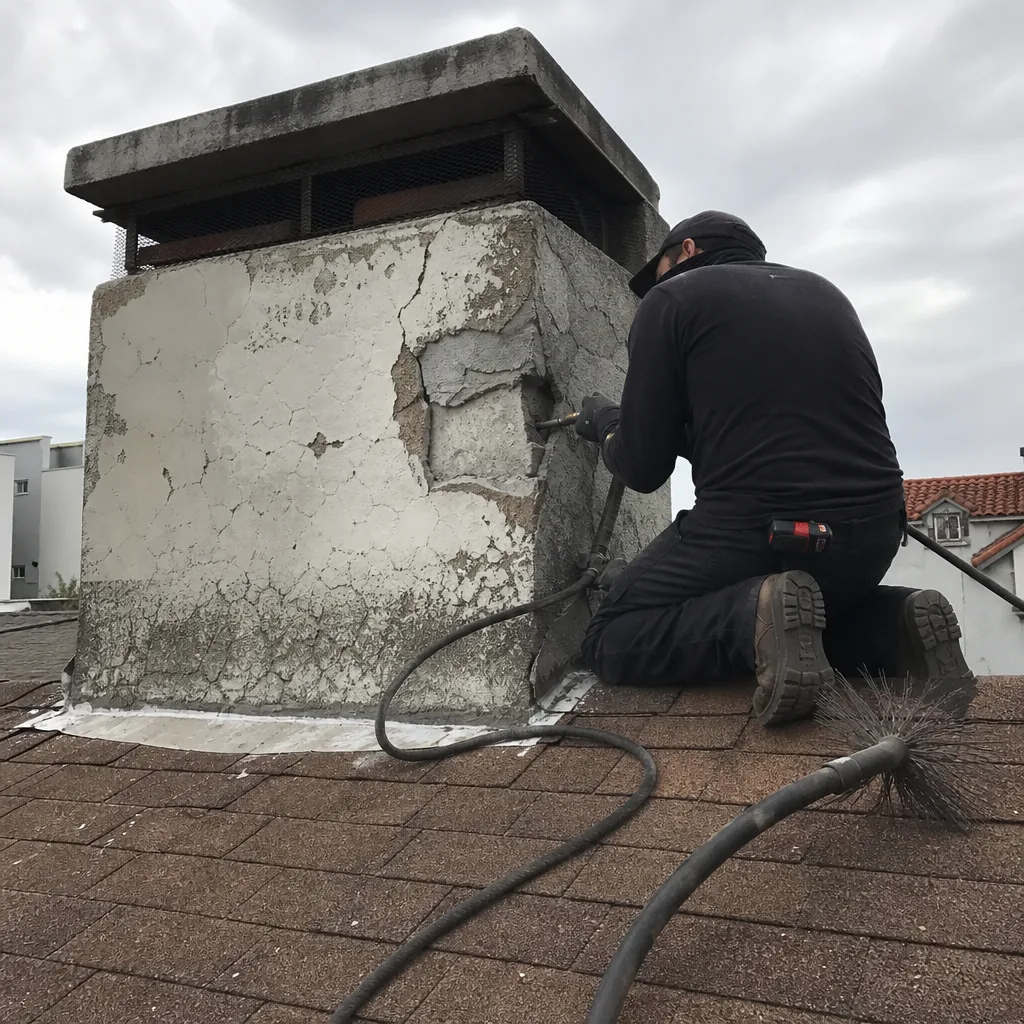
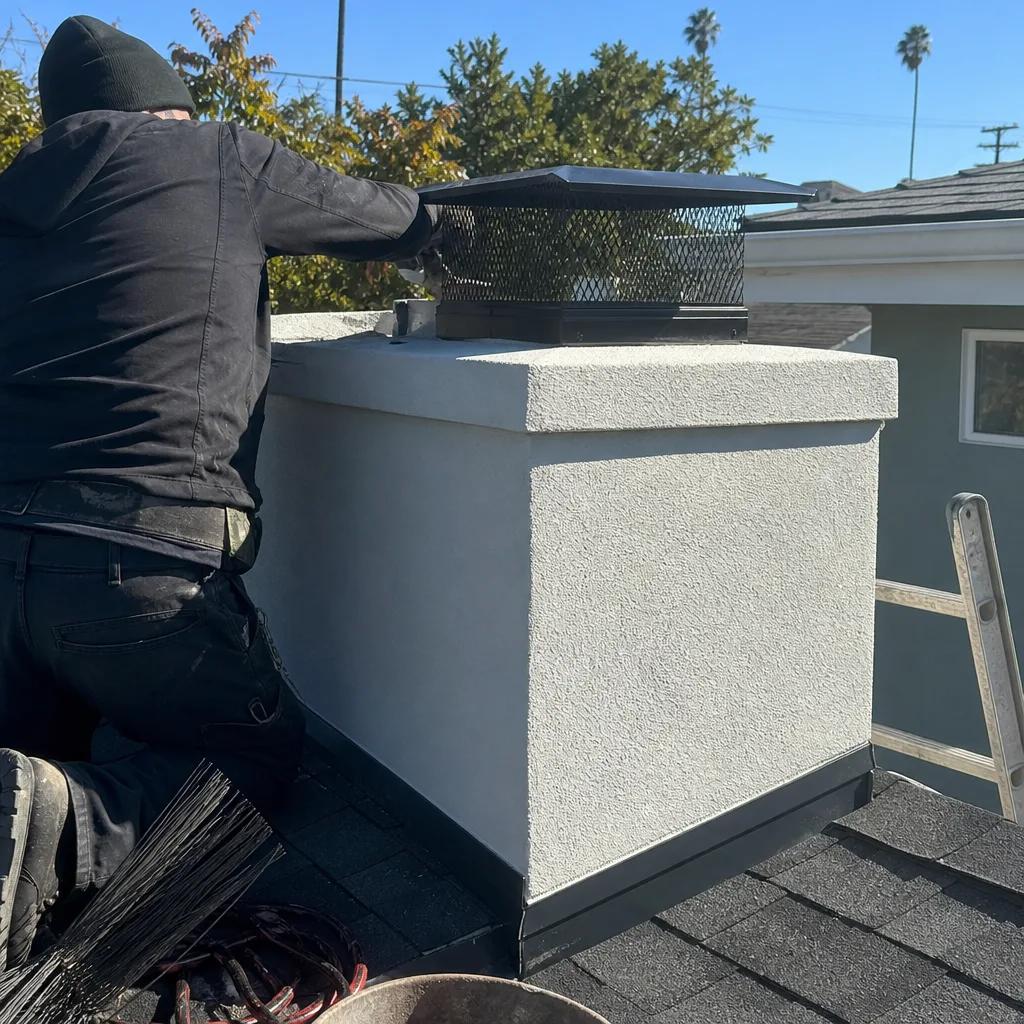
See the difference
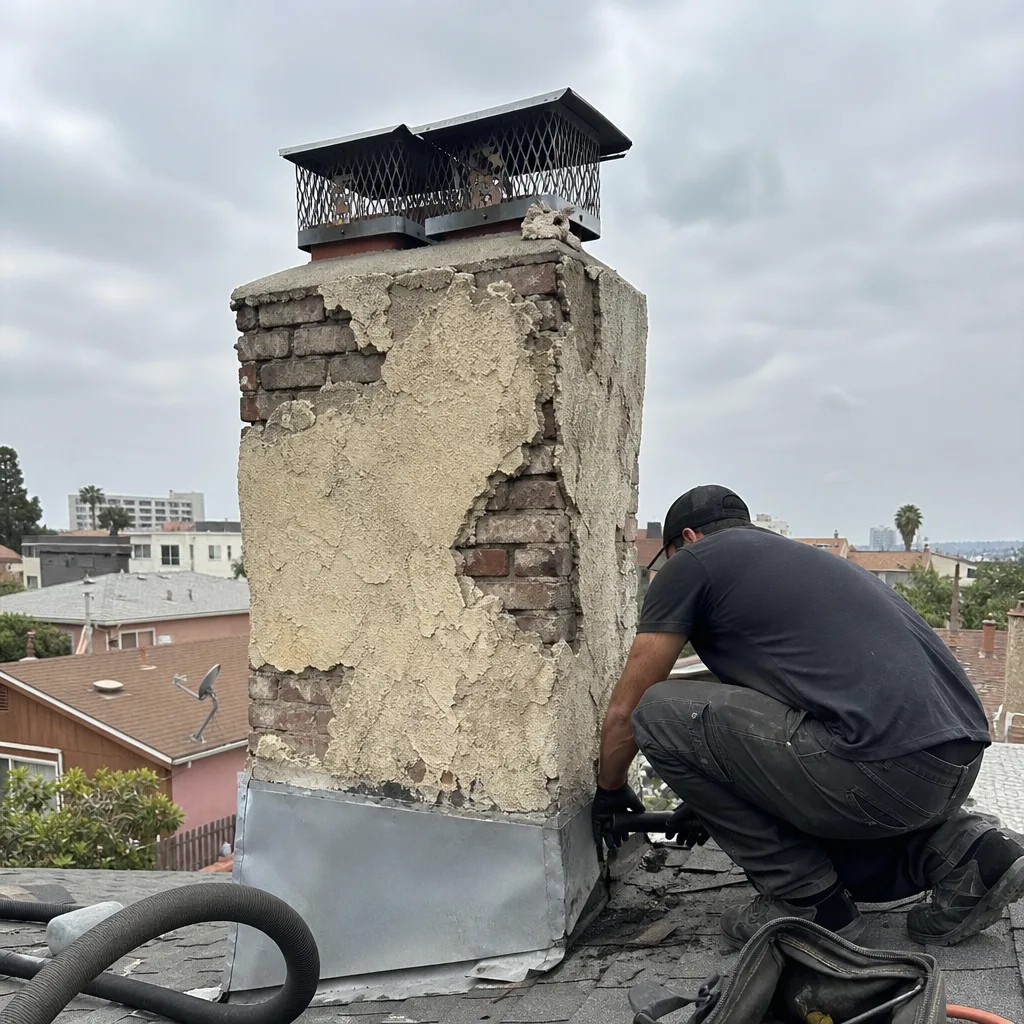 Before
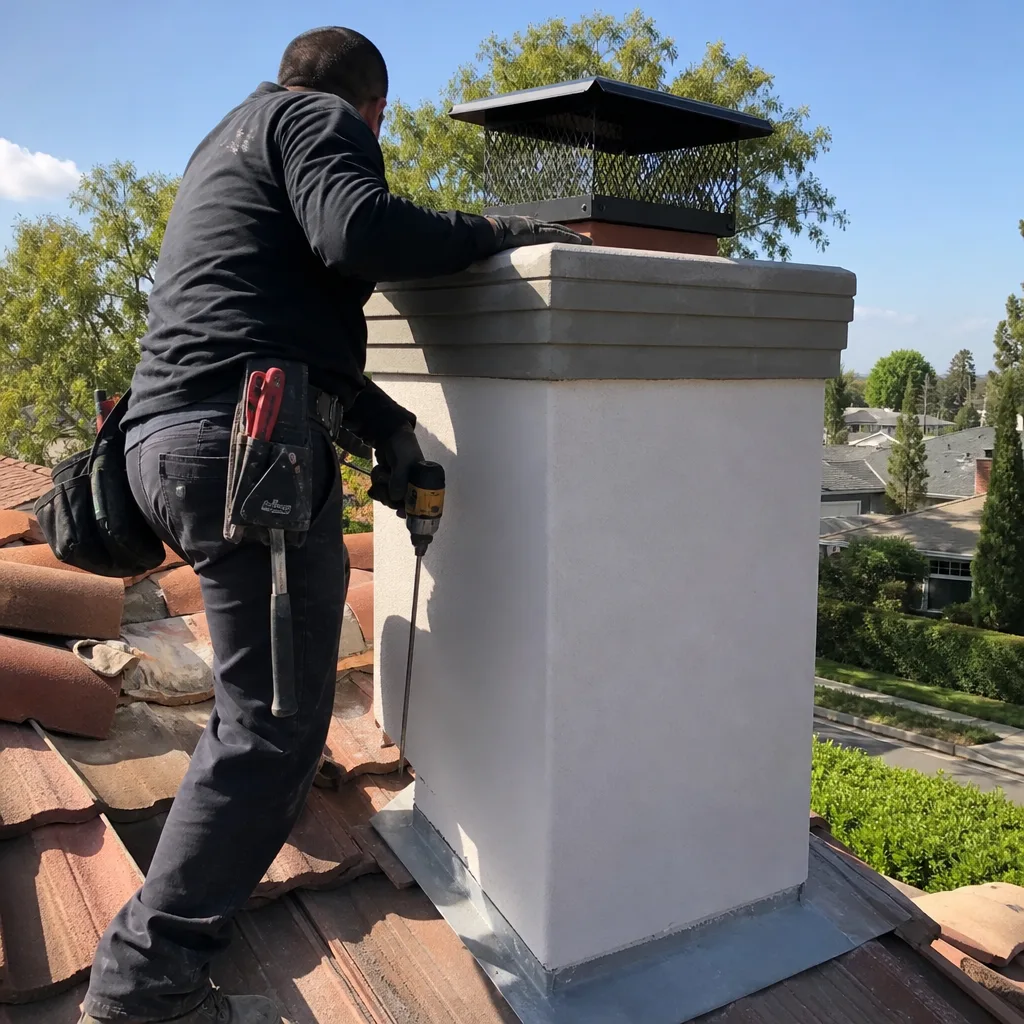 After
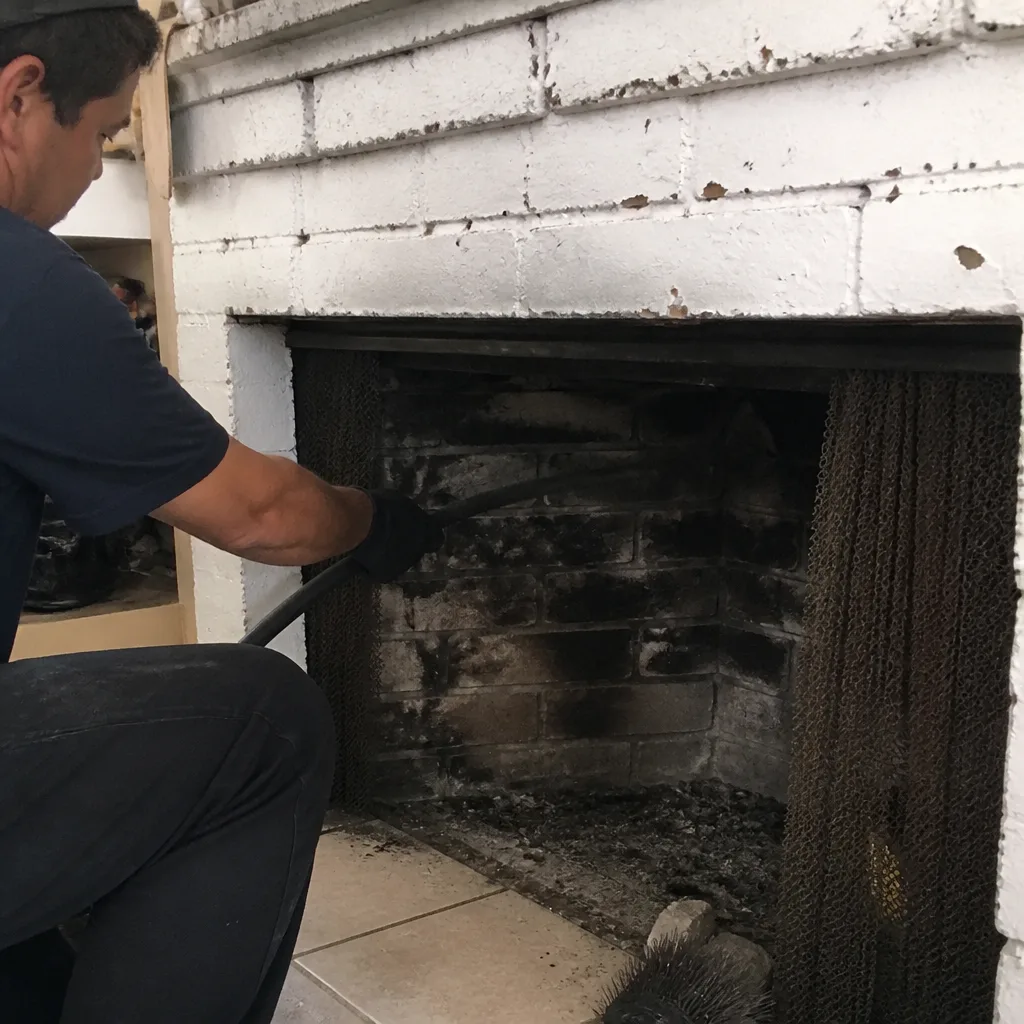 Before
 After
 Before
 After
When to Call a Professional
Call a professional if you notice any of the following: a change in how your fireplace draws, a new odor that persists when the fireplace is cold, white mineral staining on the chimney exterior or firebox interior, sounds of movement or cracking, a damper that sticks or shows rust, or visible soot in a gas fireplace. Also call if you’ve lived in your Koreatown home for more than two years without a chimney inspection, even if you haven’t noticed anything. The whole purpose of this guide is that the worst problems are quiet. A professional assessment gives you evidence, not guesses. Imperial Chimney offers free estimates in Koreatown, call (866) 253-3809 to schedule one.
Frequently Asked Questions
Three signs in combination suggest cleaning is overdue: a creosote or smoky odor that appears on humid days or when exhaust fans run, a draft that feels weaker than it used to, and visible black soot on the damper or firebox walls above the fire line. Any one of these is worth a professional look. A camera inspection will show exactly what stage of creosote you’re dealing with.
Creosote smells like a wet campfire with a sharp, chemical edge. It’s most noticeable when the chimney is cold and the air pressure in the home is negative, pulling air down the flue and into the room. It’s often stronger on humid days. If you’re smelling creosote, the buildup has reached a point where it’s off-gassing into the living space and it’s time to clean it out.
A chimney in Koreatown should be swept at least once per burn season if it’s used regularly, which means once a year for most households. If you burn more than three fires a week during winter, schedule a mid-season sweep in January or February in addition to the end-of-season cleaning. The mild Los Angeles climate means many homeowners burn fewer fires, but fewer fires with lower temperatures can actually accelerate creosote buildup, so use patterns matter more than a fixed calendar.
The white powder is efflorescence, which is dissolved minerals carried to the surface of the masonry by water moving through it. It means water is entering the chimney somewhere, usually through a cracked crown, failed flashing, or porous brick. Efflorescence itself isn’t a fire hazard, but the moisture behind it is actively deteriorating the structure and can lead to costly masonry repair if left unaddressed.
Yes, and this applies to both wood and gas fireplaces. A wood chimney blocked by creosote, a nest, or debris can prevent combustion gases from exiting, forcing them back into the living space. A gas fireplace with a clogged burner or blocked vent produces carbon monoxide that can enter the home without any smell. A carbon monoxide detector on every floor is essential, but it should supplement, not replace, regular chimney and vent inspection.
Yes. We offer professional Dryer Vent Cleaning in Koreatown as one of our core services. Lint buildup in dryer vents is a leading cause of household fires, and the same principle applies as with chimneys: you can’t see the problem, so you schedule prevention based on use. A household running five or more loads per week should have the vent cleaned annually.
The Bottom Line
Your chimney communicates with you through draft changes, odors, sounds, stains, and damper behavior. The trick is knowing what to listen for, and the time to listen is now, before the burn season starts. Koreatown homes are old enough and used enough that chimney problems are common, but they’re also predictable, and predictability means they can be caught early. The most dangerous condition, Stage 3 glazed creosote, is silent. The most destructive condition, water intrusion, starts with a white stain and a musty smell. Neither announces itself with smoke in the room. If you’ve noticed any of the signs in this guide, or if it’s simply been more than a year since anyone looked, call Imperial Chimney home at (866) 253-3809 for a free estimate. We’ll inspect, we’ll document, and we’ll tell you exactly what needs to be done, and what can safely wait.
Written by the team at Imperial Chimney, serving Koreatown since 2017.