
Last updated October 30, 2026
 Sweep & inspection
 Caps & crowns
 Flue relining
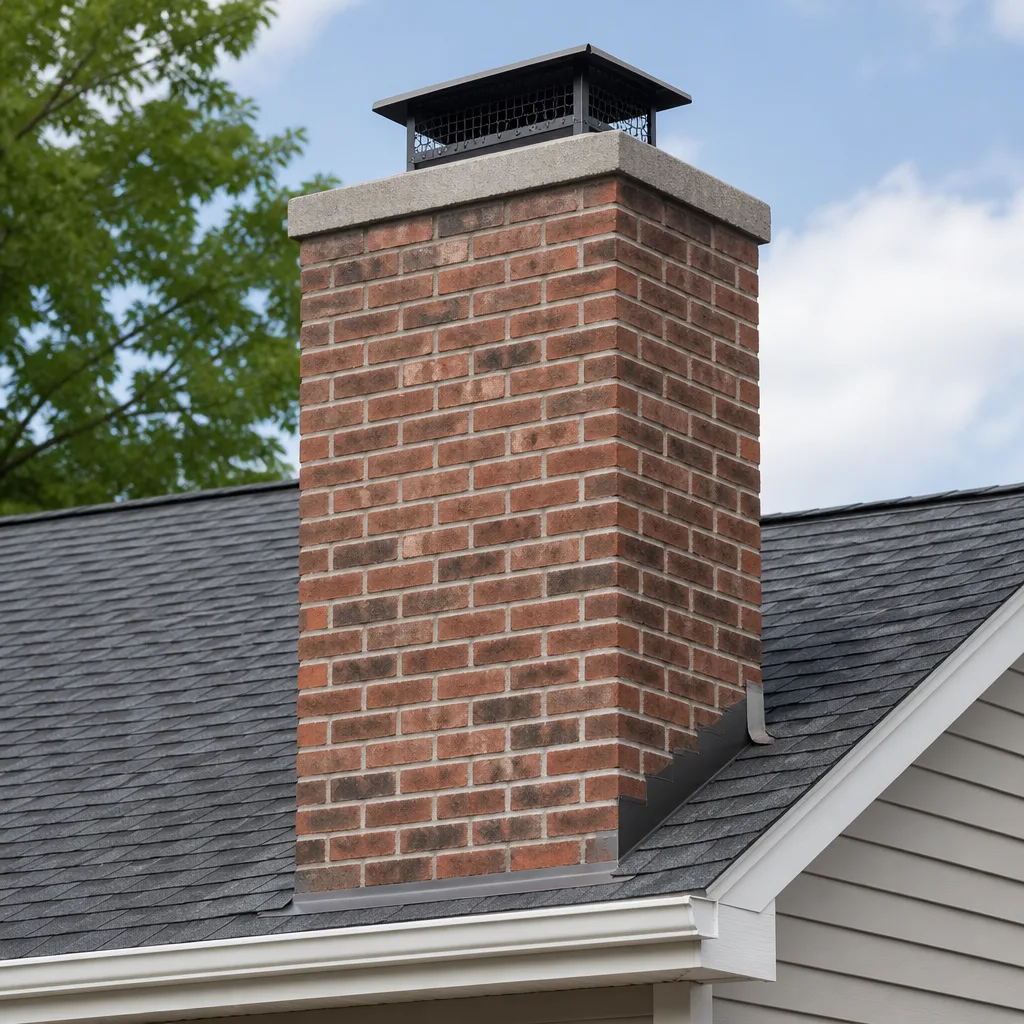 Masonry repair
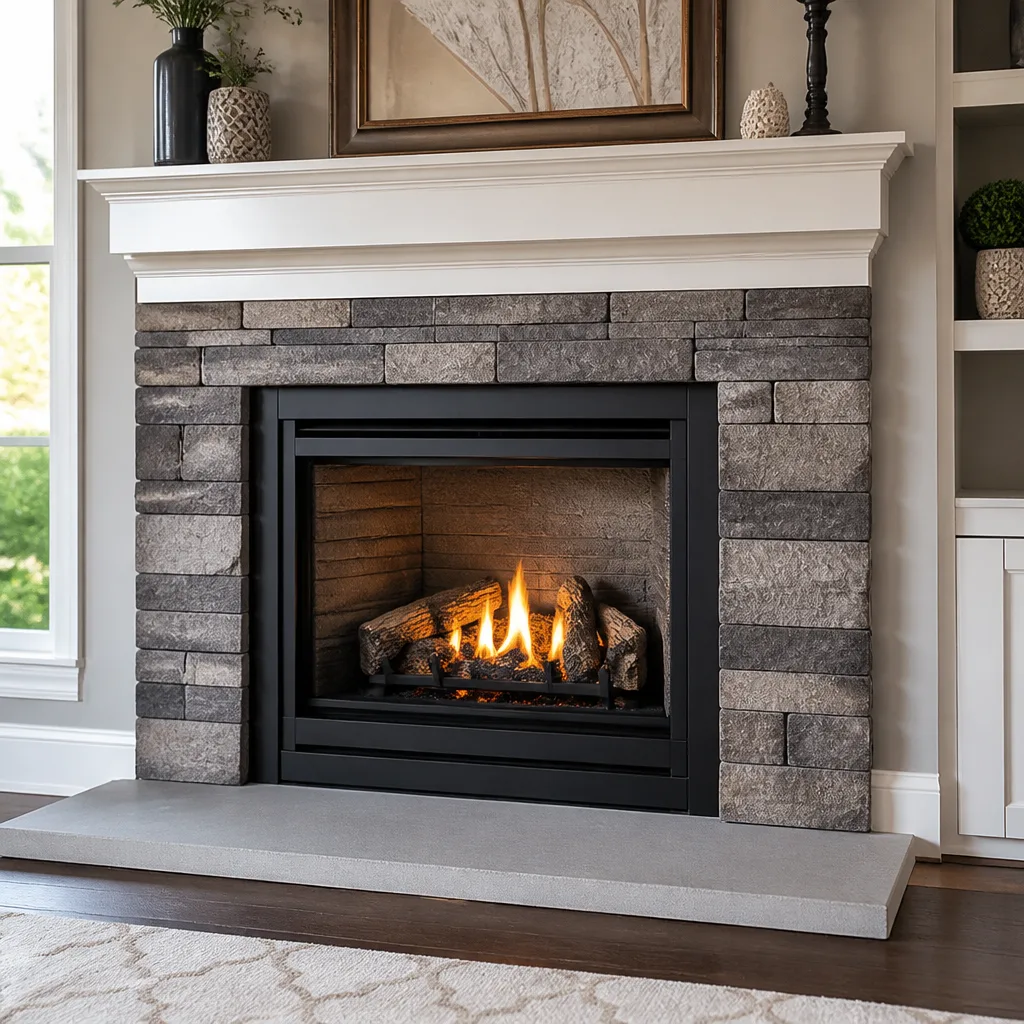 Gas fireplace service
Level 1 sweep and inspection to the NFPA 211 annual standard - flue, crown, cap, and flashing checked and photographed
Chimney sweep logs do not sweep chimneys. They loosen some creosote - which then falls where a brush and vacuum still have to collect it.
Chimney Cleaning Emergency Preparedness Guide for Koreatown Homes
A chimney fire in a Koreatown craftsman bungalow can reach 2,000°F inside the flue within minutes, hot enough to crack clay tile liners, ignite wood framing, and travel to the attic before the fire department arrives. The homeowners who survive it without structural loss are the ones who knew what to do in the first 90 seconds. This guide walks you through the specific failure sequence that turns a dirty chimney into a structure fire, and gives you a response plan for each stage before it happens. We’ve spent years cleaning and repairing chimneys in Koreatown’s 1920s and 1930s housing stock, and we’ve seen what happens when homeowners wait too long.
Quick Answer
Chimney emergency preparedness in Koreatown means three things: knowing how to recognize a chimney fire in the first 30 seconds, having a staged response plan that protects your home while you call 911, and documenting everything correctly for insurance. The single most important prep step is getting a professional chimney sweep and Level 2 inspection before burning season—see our Chimney Sweep Maintenance Checklist for Koreatown Homeowners for what to expect—because a clean flue simply doesn’t have the fuel load to sustain a chimney fire. Save (866) 253-3809 as your chimney professional contact alongside 911.
Styles & brands we work with
Table of Contents
- The Failure Sequence: How a Dirty Chimney Becomes a Structure Fire
- Recognizing a Chimney Fire: The Sounds, Smells, and Visual Signals
- Your First 90 Seconds: The Correct Response Protocol
- The Damper Question: When to Open Fully and When to Leave It Alone
- Documenting and Reporting for Insurance: The Order That Protects Your Claim
- Pre-Season Emergency Prep: What to Stage and Who to Have on Speed Dial
- Post-Event Inspection: Why a ‘Seems Fine’ Chimney Is the Most Dangerous One
- What Makes Koreatown Chimneys Different: Age, Climate, and Code
The Failure Sequence: How a Dirty Chimney Becomes a Structure Fire
The path from a neglected chimney to a house fire is not random. It follows a predictable chain of events, and each link in that chain is a point where the right action stops the sequence cold. Understanding this sequence is the core of real emergency preparedness.
Here’s the failure chain, step by step:
- Creosote accumulation. Every wood fire produces creosote, a tar-like byproduct that condenses on flue walls. In Koreatown’s mild winters, homeowners often burn lower, cooler fires, which produce creosote faster than hot, efficient burns.
- Restricted airflow. Over time, creosote builds up to a thickness that narrows the flue opening. A flue that’s lost even 25% of its diameter changes how the fireplace draws, causing more smoke to linger and deposit even more creosote.
- Ignition event. A hot fire, a spark, or embers carried up the flue contact the creosote layer. Creosote ignites at around 451°F, which is easily reached during a normal fire.
- Sustained chimney fire. Once creosote ignites, it burns aggressively. Flue temperatures can climb past 2,000°F in minutes. This is where the real danger begins.
- Liner failure. Intense heat cracks clay tile liners, the standard in Koreatown’s pre-1950 homes. These cracks expose the chimney’s interior masonry and, critically, any wood framing within 2 inches of the chimney.
- Structure fire. Flames and superheated gases escape through liner cracks and contact combustible framing. The fire has now left the chimney and entered the house.
We’ve seen this sequence play out in Koreatown homes where an annual sweep would have removed the fuel at step one. The takeaway: emergency preparedness starts with prevention, not response. If you haven’t had your chimney swept in the last 12 months, the most important emergency prep step is scheduling a Chimney Sweep in Koreatown before you light another fire.
Recognizing a Chimney Fire: The Sounds, Smells, and Visual Signals
A chimney fire announces itself, but only if you know what to listen for—our Chimney Cleaning Warning Signs: A Koreatown Homeowner’s Reference Guide covers this in detail. Most homeowners who experience one describe the same three signals, and they’re distinct from a normal hot burn.
The sounds: A chimney fire often sounds like a freight train or a low, rumbling roar coming from the chimney. Some homeowners compare it to a jet engine at a distance. This rumble is the sound of creosote burning rapidly and air being pulled forcefully up the flue. It’s not the gentle crackle of logs in the firebox, it’s louder, deeper, and comes from inside the chimney structure itself.
The smells: A chimney fire produces an acrid, intense smell that’s noticeably different from normal wood smoke. Some describe it as hot tar or burning asphalt. If you smell something chemical and hot coming from your fireplace or walls near the chimney, that’s a red flag.
The visual signals: Look at the chimney exterior and the chimney cap. You may see flames shooting out of the top of the chimney, dense dark smoke, or glowing embers being thrown from the cap. Inside, the firebox may suddenly draw with unusual ferocity. From outside, neighbors sometimes report seeing sparks or flames from the chimney top before the homeowner even realizes something is wrong.
In Koreatown’s dense residential blocks, chimney fires are often first noticed by neighbors across a shared driveway or from an adjacent apartment building. If a neighbor tells you they saw flames from your chimney, take it seriously even if the fire has died down by the time you check.
Your First 90 Seconds: The Correct Response Protocol
What you do in the first minute and a half of a chimney fire directly affects whether the fire stays contained or spreads to structural framing. Here’s the correct order of actions:
- Call 911 immediately. Do this first, before anything else. A chimney fire can transition to a structure fire faster than you expect. Don’t wait to see if it dies down. Firefighters in Koreatown’s LAFD stations know the area’s housing stock and can respond quickly.
- Close the fireplace doors or glass screen if you have them. This reduces oxygen flow to the firebox. If you have a freestanding stove, close the air intake vents fully.
- Alert everyone in the house. Get everyone out of the house and to a safe meeting point. Do not stay inside to fight the fire yourself.
- Do not use water. Throwing water into a chimney fire can cause a steam explosion that cracks the flue liner and spreads fire into walls. It can also shatter the firebox from thermal shock.
- Do not close the damper completely if the fire is roaring. This is counterintuitive, and we address it in the next section in detail.
- If you have a chimney fire suppressant stick (like Chimfex), use it only after 911 is called and only if you can do so safely from the side of the firebox without reaching into flames.
- Wait outside for the fire department. Do not re-enter the house until firefighters have cleared it and confirmed the chimney fire is fully extinguished, including any hot spots in the attic or wall cavities.
The most common mistake we hear about from Koreatown homeowners is waiting too long to call 911. A chimney fire that “looks like it’s settling down” can be burning invisibly inside the flue, heating bricks that transfer heat to framing for hours after visible flames stop.
The Damper Question: When to Open Fully and When to Leave It Alone
The damper is the most misunderstood part of chimney fire response. The short answer: it depends on the stage of the fire, and the wrong move can make things worse.
If the fire is just starting (first 10-15 seconds): Opening the damper fully can increase draft, which pulls the fire up the chimney faster and can intensify it. But closing the damper traps heat and smoke in the firebox, pushing it into the room. In most cases, if you catch a chimney fire in its earliest moments, the best move is to close the fireplace doors or screen, then evacuate. Don’t fuss with the damper.
If the fire is fully involved (roaring, rumbling, intense): The damper position matters less than you’d think. A fully involved chimney fire has created its own draft, a literal fire-driven windstorm in the flue. Closing the damper at this stage may reduce oxygen flow, but it also redirects superheated gases into your living space. Opening it fully doesn’t feed the fire significantly, because the fire is already pulling air from the room through any available opening.
The practical guidance we give Koreatown homeowners: if you’re not sure, leave the damper where it is and get out. The firefighters who arrive will handle ventilation as part of their response. Their training covers the specific airflow dynamics of chimney fires in older masonry structures, which are common throughout Koreatown’s historic districts.
Documenting and Reporting for Insurance: The Order That Protects Your Claim
Here’s a claims mistake we see regularly: homeowners call a chimney sweep before they’ve documented the damage and before the fire marshal has completed their report. This can cost thousands in a denied or reduced claim.
The correct order is this:
- Take photos and video immediately. After the fire department leaves, photograph everything: the fireplace, the chimney exterior, any damage to walls or ceilings, any soot or smoke staining. Use your phone. Wide shots and close-ups. This is your primary evidence.
- Do not clean anything. Don’t sweep up soot, don’t wipe down walls, don’t touch the firebox. Insurance adjusters need to see the scene as it is. Cleaning before they arrive can be interpreted as tampering with evidence.
- Call your insurance company the same day. Report the incident and ask specifically about coverage for chimney fire damage and required documentation. Every policy differs.
- Get the fire department report. The LAFD will generate an incident report. Request a copy. This report is often the single most important document for your claim, because it establishes the cause and origin independently.
- Then, and only then, call a certified chimney professional for a post-fire inspection. If you call us first and we clean the chimney before the adjuster sees it, the visible evidence of creosote ignition is gone, and the insurance company can argue the fire didn’t happen as reported.
This is not about gaming insurance. It’s about preserving evidence so the claim process is honest and straightforward. A documented chimney fire with a fire department report and professional inspection findings is a clean, defensible claim. An undocumented one is a fight.
Pre-Season Emergency Prep: What to Stage and Who to Have on Speed Dial
Preparedness means having things in place before the first fire of the season. Here’s what we recommend every Koreatown homeowner have ready, and you can find more guides & resources on our blog:
Items to stage near the fireplace:
- A working fire extinguisher rated for Class A fires (ordinary combustibles), mounted within 10 feet of the fireplace but not directly next to it. If the fire is near the extinguisher, you can’t reach it.
- A chimney fire suppressant stick (Chimfex or similar). These are one-time-use flares that consume oxygen in the flue to choke out a chimney fire. They’re not a substitute for 911, but they can slow a fire while firefighters respond.
- Fireplace gloves rated for high heat, for operating glass doors or screens during an emergency.
- Your phone. Seems obvious, but in an emergency people run for the kitchen phone or get disoriented. Keep your cell phone with you when you’re managing a fire.
Two phone numbers every Koreatown homeowner should save now:
- 911 for active fire emergencies.
- (866) 253-3809 for Imperial Chimney. This is the number to call after the fire department clears the scene. Save it as “Chimney – Imperial” in your contacts so you’re not searching for it during a stressful moment.
We’ve responded to post-chimney-fire inspections in Koreatown where homeowners spent an hour trying to find a chimney company’s number after the fire was out. That’s an hour where an unnoticed hot spot in the attic could be smoldering. Save the number now.
Post-Event Inspection: Why a ‘Seems Fine’ Chimney Is the Most Dangerous One
After a chimney fire, the worst possible conclusion is “it looks okay from the outside, so we’re fine.” That chimney is more dangerous than one that’s visibly damaged, because you’ll use it again without addressing hidden structural failures.
A chimney fire’s damage is often invisible from the exterior. The real damage is inside the flue: hairline cracks in clay tiles, damaged mortar joints, compromised flue liner sections that can allow hot gases into wall cavities on the next fire. These hidden failures are exactly what a Chimney Repair in Koreatown inspection is designed to find.
After any chimney fire, the industry standard is a Level 2 inspection. This involves:
- A video scan of the entire flue interior with a camera system
- Examination of the chimney structure from the attic and roof
- Verification of the smoke chamber, damper, and firebox integrity
- Documentation of every finding with photo evidence
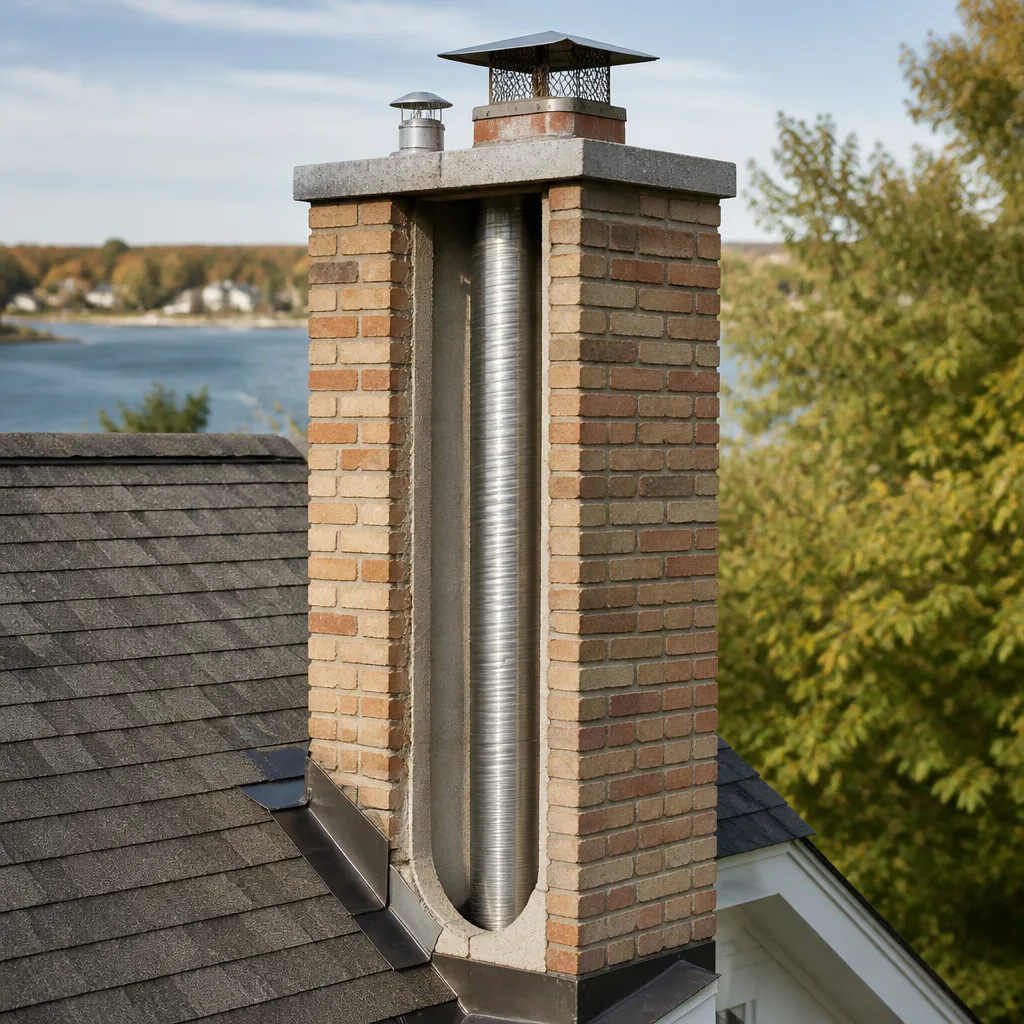
We tell you what we found and show you. You’ll see the video footage of your flue before we make any repair recommendation. If the damage is limited to creosote residue and minor cracking, a sweep and repair may be sufficient. If the liner is compromised, we may recommend a HeatShield resurfacing application, which restores the flue interior without a full rebuild. In cases of severe liner failure, a DuraFlex stainless steel liner may be required to safely return the chimney to service.
The point is this: you cannot know what a chimney fire did to your flue without looking inside it with a camera. Guessing is how second fires happen.
What Makes Koreatown Chimneys Different: Age, Climate, and Code
Koreatown’s housing stock has specific characteristics that affect chimney safety. Most of the single-family homes and small multi-unit buildings in this neighborhood were built between 1915 and 1945, which means:
- Unglazed clay tile liners were standard in construction. These tiles crack under thermal stress more readily than modern stainless steel or cast-in-place liners.
- Mortar joints have aged. Lime-based mortar from the 1920s deteriorates over decades, especially in a climate with marine-layer moisture and temperature swings.
- Flue dimensions are often undersized by modern standards, which affects draft and increases creosote accumulation rates.
- Chimneys are often shared or adjacent to property lines. Koreatown’s dense lot layout means chimney exteriors can be within feet of neighboring structures, raising the stakes of a fire.
The local climate matters too. Koreatown doesn’t see the deep-freeze winters of the Midwest, but our mild, damp winters mean homeowners burn shorter, cooler fires over longer periods. Cooler fires produce more creosote per cord of wood burned. A fireplace that gets occasional weekend use from November through March can accumulate more creosote than a heavily used fireplace in a cold climate that burns hot daily fires.
If you’re unsure about your chimney’s history, a Chimney Sweep in Koreatown includes a visual inspection that we’ll walk you through, so you know the current condition before you light the first fire of the season.
Common Mistakes to Avoid
- Using water to extinguish a chimney fire. Water hitting a 2,000°F flue liner creates a thermal shock that can shatter clay tiles instantly, spreading fire into walls. It also converts to steam inside the flue, which can push flames into the room.
- Not calling 911 because the fire “seems to be dying down.” A dying-down chimney fire is often just burning invisibly in the flue. Firefighters have thermal imaging cameras that can find hot spots in walls and attics that you can’t see.
- Sweeping or cleaning the firebox before the insurance adjuster arrives. You’re destroying the physical evidence of the fire. Let the adjuster see the scene exactly as it was when the fire department left.
- Assuming a gas fireplace has no chimney fire risk. Gas fireplaces vent through the same flue structure and can ignite accumulated creosote from previous wood burning, or soot from the gas unit itself. Your gas fireplace needs an annual inspection too.
- Using the fireplace the next day after a “minor” chimney fire. The flue may have hairline cracks you can’t see. One more fire is all it takes for superheated gases to find those cracks and reach framing.
- Calling a chimney repair company before the fire department finishes their report. The fire marshal’s documentation is the anchor of your insurance claim. Don’t disturb the scene until that report is complete.
- Ignoring the neighbor who says they saw flames from your chimney. Take that call seriously. Neighbors in Koreatown’s dense blocks are often the first to spot a chimney fire, and their observation could be the difference between a chimney fire and a structure fire.
See the difference
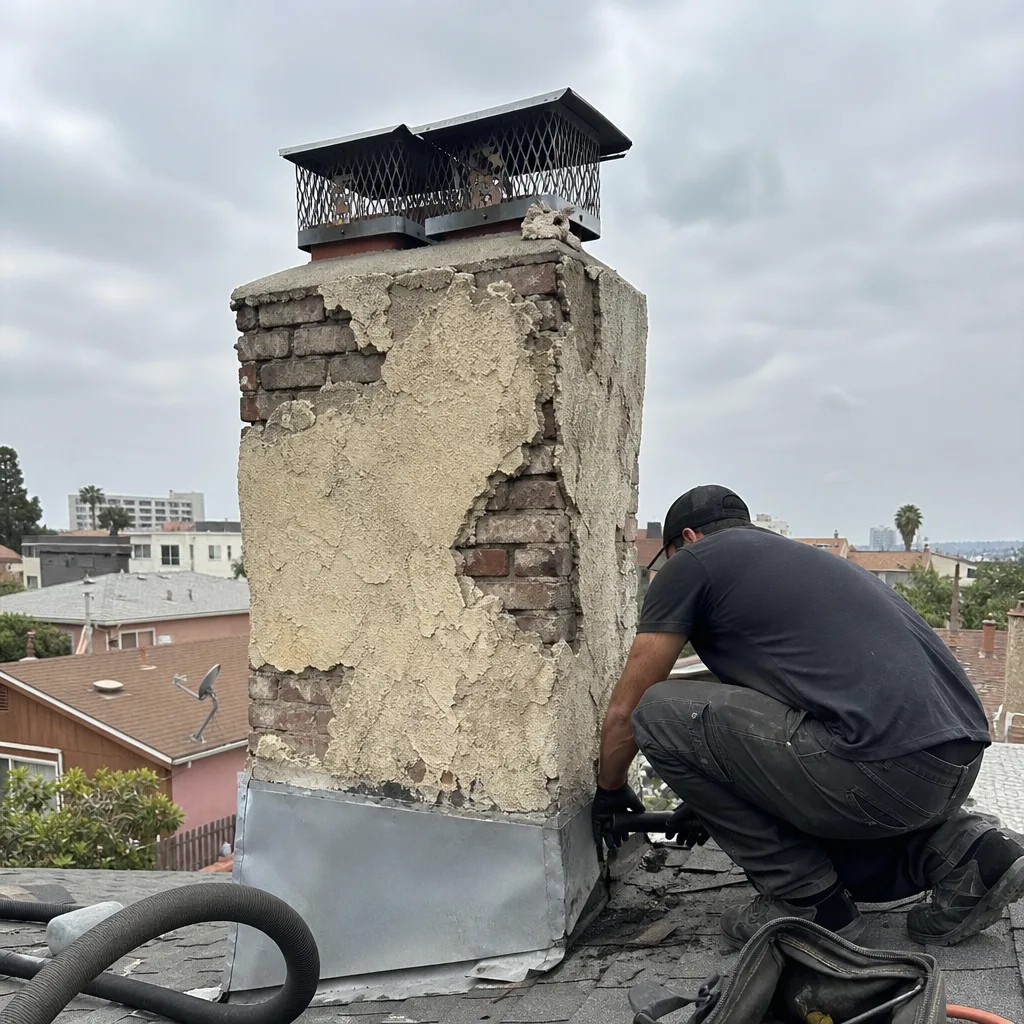 Before
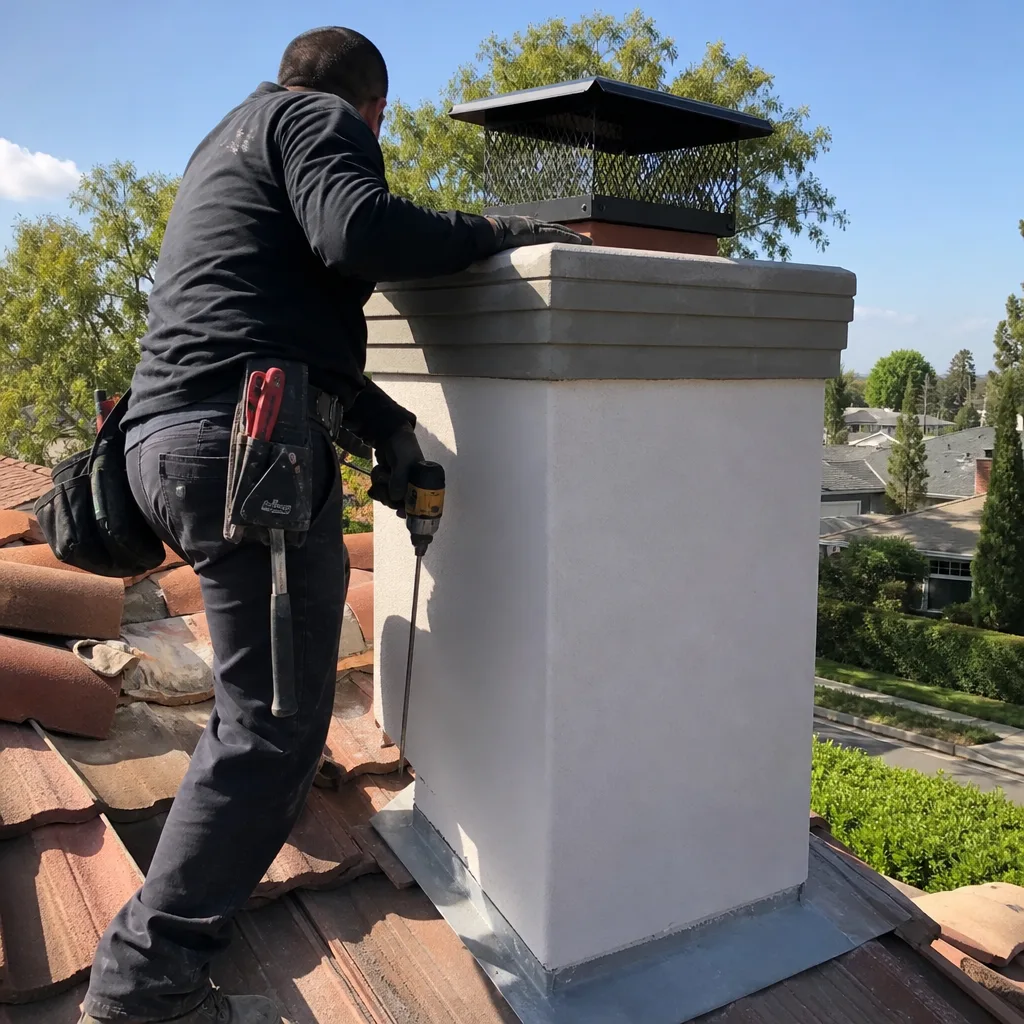 After
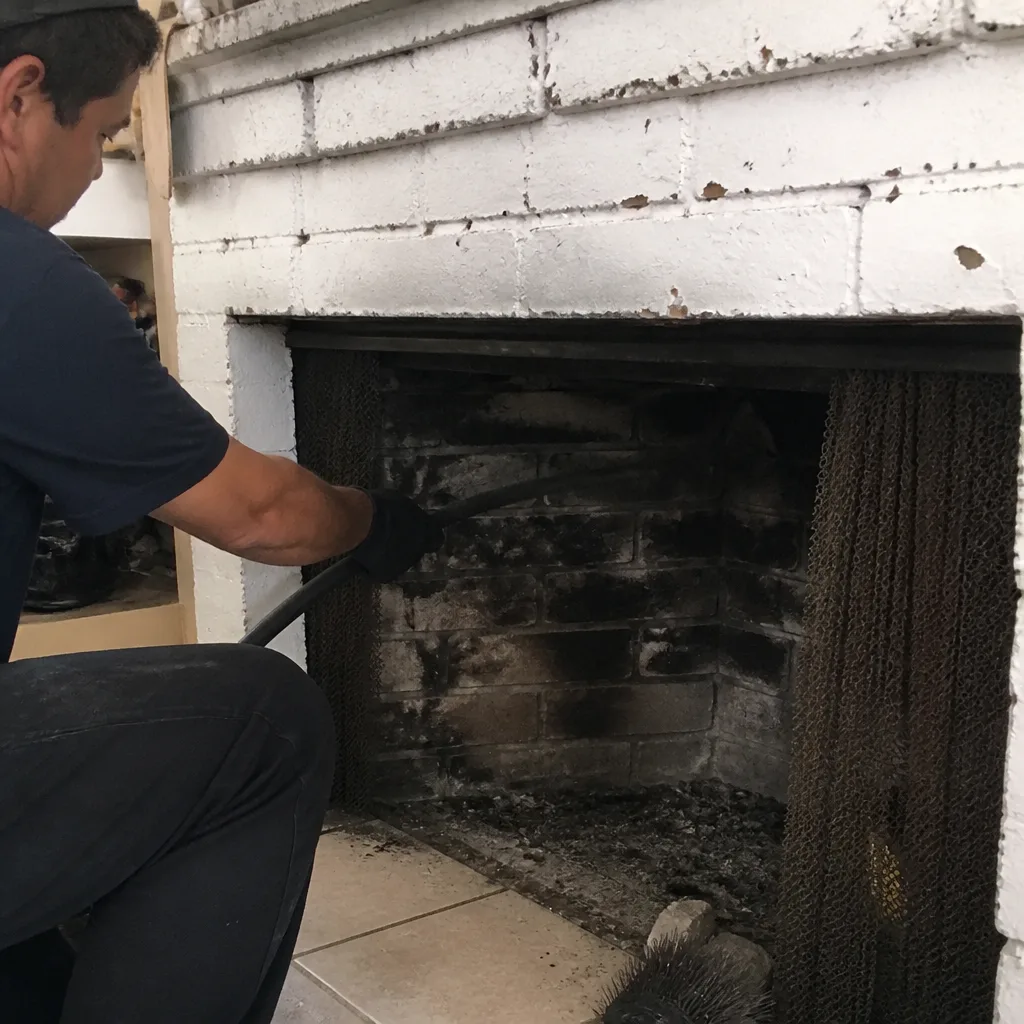 Before
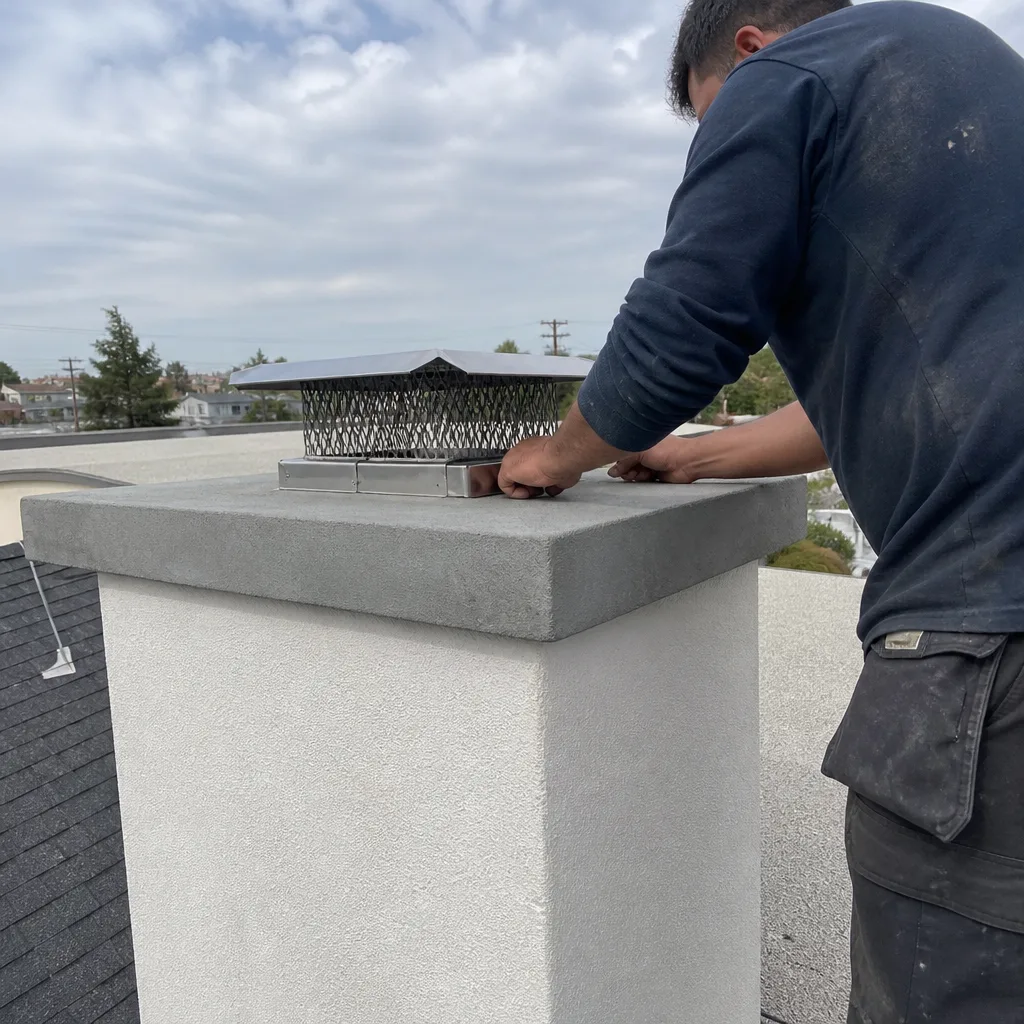 After
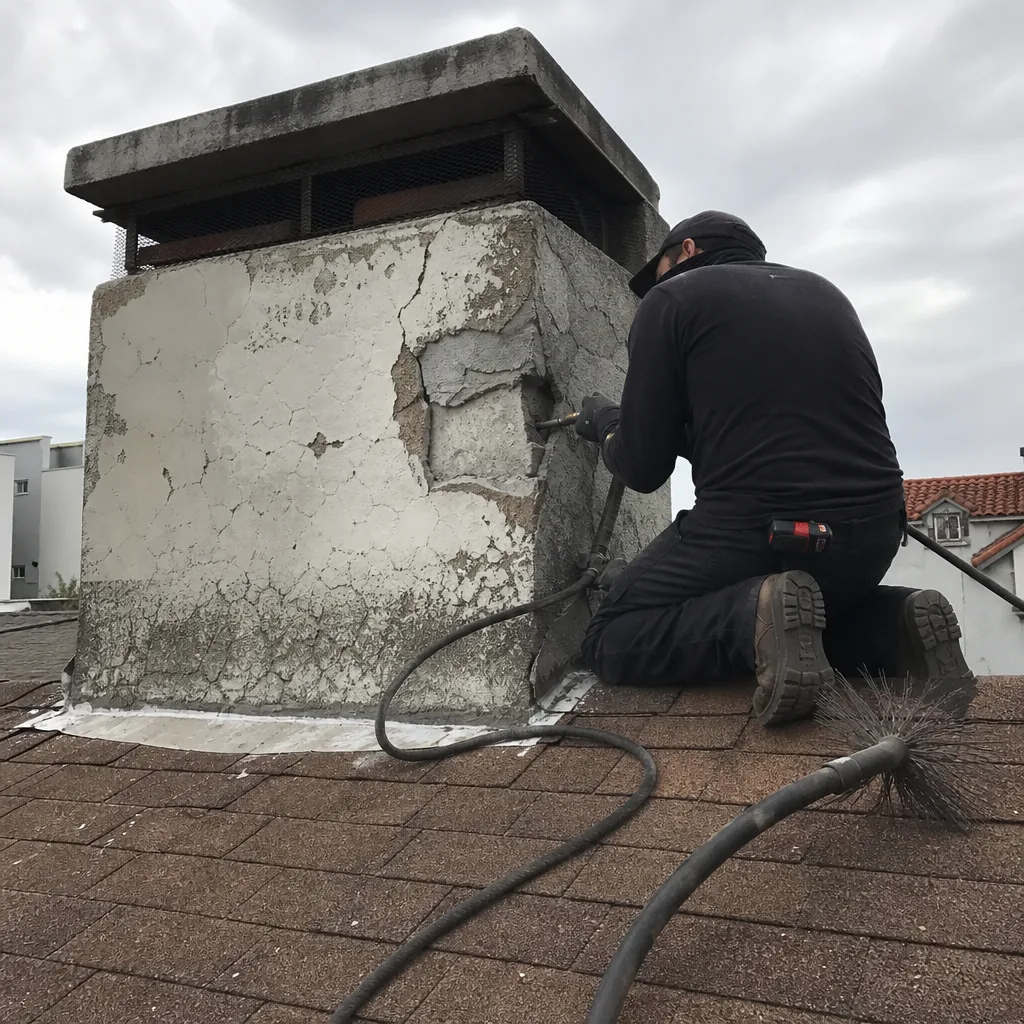 Before
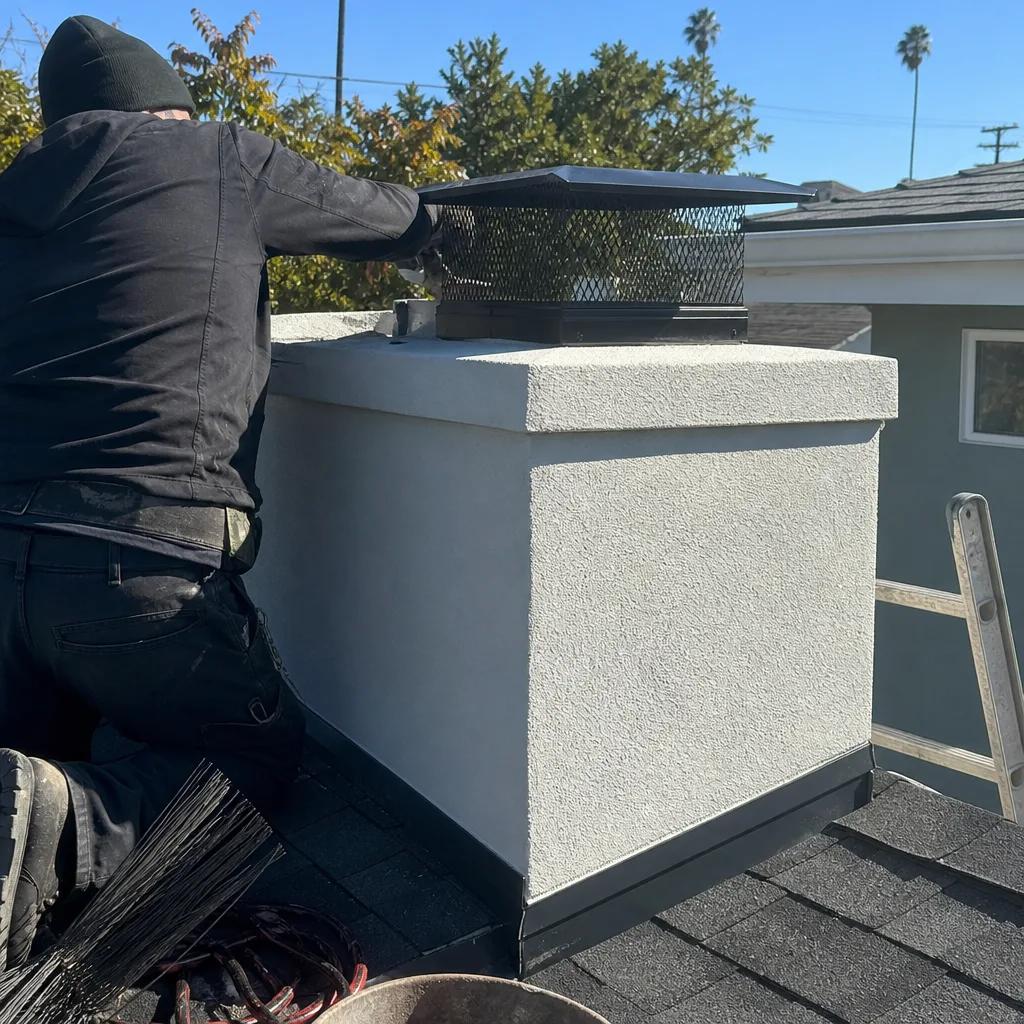 After
When to Call a Professional
Call a professional chimney company if you experience any of these: you hear the rumbling roar of a chimney fire while the fire is burning, you see flames or sparks from the chimney top, you smell acrid tar-like odors from the fireplace even when it’s not in use, you notice soot or smoke staining on walls near the chimney, you haven’t had a sweep in over 12 months and you’re about to start using the fireplace, or you’ve had any chimney fire, no matter how minor, and need a Level 2 inspection before using the fireplace again. Imperial Chimney offers free estimates in Koreatown, call (866) 253-3809 for an immediate scheduling. Our work includes camera inspection of the entire flue, and we show you what we find before recommending any repair.
Frequently Asked Questions
A chimney sweep in Koreatown typically costs between $180 and $340, depending on flue condition, accessibility, and whether you have a standard masonry fireplace or a more complex setup. The price includes a visual inspection and usually a basic report. Call (866) 253-3809 for an exact quote, estimates are free and we’ll confirm the price before any work begins.
The National Fire Protection Association recommends a chimney sweep at least once per year, and we agree with that standard for Koreatown homes. If you burn more than 40 fires per season, use soft woods like pine, or have an older unlined or clay-tiled chimney, you may need a mid-season sweep as well. A sweep every 12 months is the minimum that keeps creosote from building to dangerous thickness.
Not necessarily. Many chimney fires cause only creosote ignition without structurally damaging the liner, and a sweep and inspection can clear the chimney for use. However, if the video inspection shows cracked tiles or failed mortar joints, you’ll need liner work, either a HeatShield resurfacing application or a DuraFlex stainless steel liner replacement. We’ll show you the video footage so you can see exactly why the recommendation is being made.
The creosote layer inside your flue thickens every time you burn, and after two or three years of regular use, it can reach a thickness where any hot fire can ignite it. The result is the failure sequence described above: creosote fire, flue temperatures above 2,000°F, cracked liners, and potential structure fire. The risk is not linear, it compounds. Skipping one year is a small risk. Skipping four years is playing odds with your house.
Yes, once the sweep is complete and the technician confirms the flue is clean and clear, you can burn the same day. There’s no drying time or curing period for a standard sweep. If repairs were done, different timelines apply, and your technician will tell you when the fireplace is safe to use again.
Lint buildup in dryer vents is a genuine and well-documented fire hazard. The NFPA identifies dryer vent fires as a leading cause of appliance-related house fires, and the buildup happens gradually, hidden behind walls and in vent runs. We offer Dryer Vent Cleaning in Koreatown because the same homeowners who care about chimney safety usually care about the other ventilation systems in their home. If your dryer takes longer than 40 minutes to dry a load, that’s a sign of restricted airflow and a lint accumulation problem worth addressing.
The Bottom Line
Chimney emergency preparedness in Koreatown comes down to two things: removing the fuel before it becomes a problem, and knowing what to do in the first 90 seconds if a fire still happens. Get a professional sweep every 12 months, save (866) 253-3809 in your phone, and understand that a chimney fire is not a fire in your fireplace, it’s a fire in your chimney, and its path to your attic is shorter than you think. The homeowners who handle chimney fires well are the ones who prepared before the fire was ever lit. If you haven’t scheduled your seasonal inspection yet, call us today. We’ll get you on the calendar and make sure your chimney is ready for another Koreatown winter.
Written by the team at Imperial Chimney, serving Koreatown since 2017.